


Science and Research
The BLM strives to apply gold standard science as part of its efforts to ensure that self-sustaining populations of wild horses and burros can thrive on healthy public rangelands. The BLM and its partners use scientifically validated methods to monitor rangeland vegetation, soils, water, wildlife habitat and the effects of wildfire. The BLM also relies on sound science and monitoring data to determine appropriate management levels and population sizes of wild horse and burro herds. Although the BLM has deep experience with resource monitoring, it is not a research agency – instead, the BLM works with the US Geological Survey (USGS), other federal agencies with research expertise, universities, and other partners to address questions that are vital to wild horse and burro management.
The BLM supports scientific research that could improve the agency’s management of wild horses and burros – ultimately reducing costs to the American taxpayer and improving the protection of these iconic symbols of the West. Reports from the National Academies of Sciences are important guides to agency actions and research support. The BLM Wild Horse and Burro Program Strategic Research Plan outlines research topics of high interest. Periodically, the BLM solicits research proposals that could address agency needs. There is currently no open notice of funding opportunity for wild horse and burro research proposals. All research projects that require BLM-managed wild horse and burro handling, BLM funding, or BLM personnel time must be approved by the agency; the process to apply is listed in the section below called ‘Unsolicited Research Proposals.’
View a list of current wild horse and burro research projects funded by or permitted by the BLM.
Fertility Control
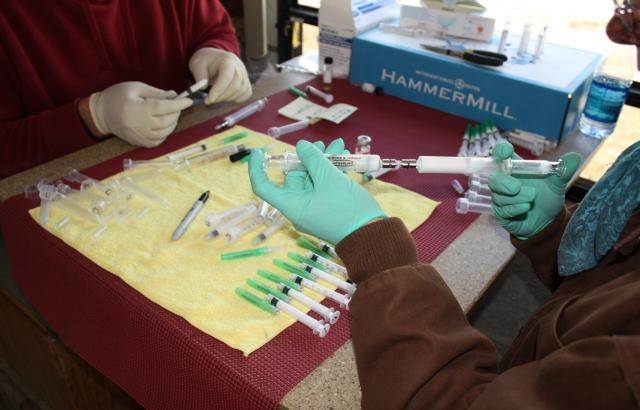
The research topic that could make the biggest difference to the BLM’s wild horse and burro program remains the development of humane, safe, practical, and effective, longer-lasting fertility control methods for mares. To reduce overall herd growth rates, empirical studies and modeling confirm that a focus on reducing mare and jenny fertility is more effective, per-capita, than efforts to reduce stallion or jack fertility. Research supported by the BLM and other agencies has shown that some approaches – such as hormone implants or chemical vasectomies – are ineffective or impractical.
Today the most commonly used fertility control methods are ‘immunocontraceptive’ vaccines with relatively short duration of effect, which limits their usefulness. The most widely used PZP vaccine formulation, Zonastat-H, can be administered by hand-injection or by ground-darting, but is generally only effective for about one year. PZP-22 is a different formulation that is marginally effective for 1-2 years, but a second dose can lead to 2-3 years of infertility. SpayVac is another PZP vaccine formulation that is being tested for longer-lasting effect. Like ZonaStat-H, the gonadotropin-releasing hormone (GnRH) vaccine called GonaCon-Equine is federally approved for hand-injection or darting and has a well-documented safety record. Treating a mare with one dose of the GonaCon-Equine vaccine is marginally effective for 1-2 years, but BLM-supported research showed that a second dose given a month or more later can cause several years of infertility. GonaCon-Equine vaccine has been increasingly used by the BLM, volunteers, and other partners in wild horse fertility control applications.
New methods such as longer-lasting vaccines or minimally-invasive mare sterilization procedures could reduce the number of times that mares would need to be handled or darted. Longer-lasting methods would help the BLM to reduce herd growth rates and costs to taxpayers by managing herds with fewer gathers and removals.
Wild Horses and Burros and the Environment
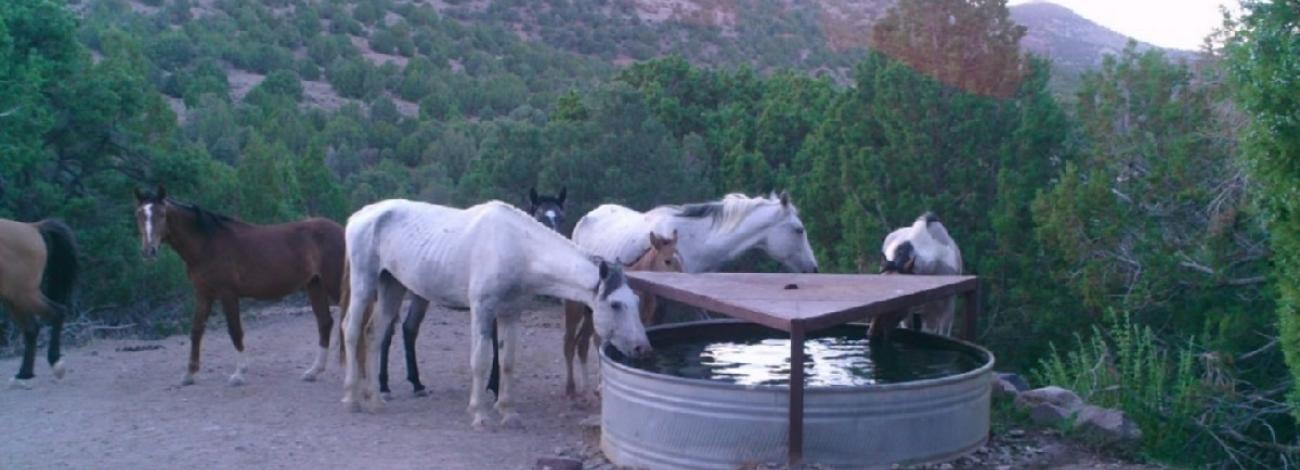
Studies that analyze relationships between wild horses and burros and their environment could help the BLM protect wild horses and burros and meet its multiple use mandate. The BLM determines appropriate management levels for each managed herd, which are population sizes that allow for a thriving natural ecological balance and the needs of horses, burros, wildlife, livestock, and other uses of the public lands. When wild horses and burros are overpopulated relative to available natural resources, they may suffer and can degrade soils, water quality, rangeland productivity, and fish and wildlife habitat. Recent studies have documented wild horse and burro ecological interactions with vegetation, Greater sage-grouse and other wildlife. Ongoing and future research could be informative with respect to wildfire, wildlife conservation, water resources, livestock grazing, energy production, recreation, and other multiple uses.
Other Research Topics
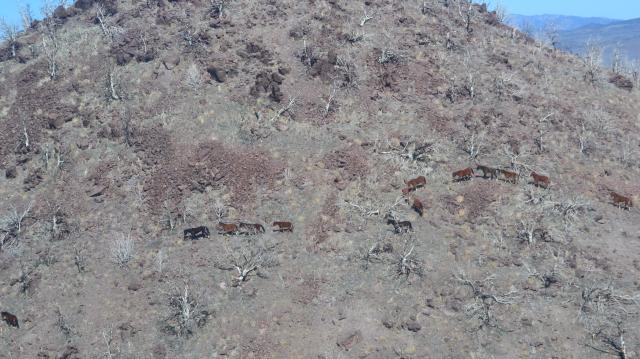
A range of other research topics could inform and benefit wild horse and burro management. As one example, new genomic methods could deepen the BLM’s understanding of population genetics. The BLM’s management is already informed by the results of population genetic monitoring, where DNA from captured horses’ and burros’ hair follicles is amplified and analyzed. Results summarized in the National Academies of Sciences’ 2013 report demonstrated that – despite common lore – very few BLM-managed herds actually have significant genetic contributions from early Spanish horses. For the most part, BLM-managed wild horses and burros appear to be highly related to a mix of common breeds, are not truly isolated, share ancestry with other managed free-roaming herds, and often have recent or ongoing genetic interchange in the form of natural movements or human-assisted translocations.
The BLM aims to find good homes for excess animals that have been removed from the range. The agency could potentially benefit from socioeconomic research that increases the number of people who adopt or purchase a wild horse. Training level and other factors influence adoption rates, but gentling animals takes time and money, so there are known resource allocation tradeoffs that influence overall animal placement rates.
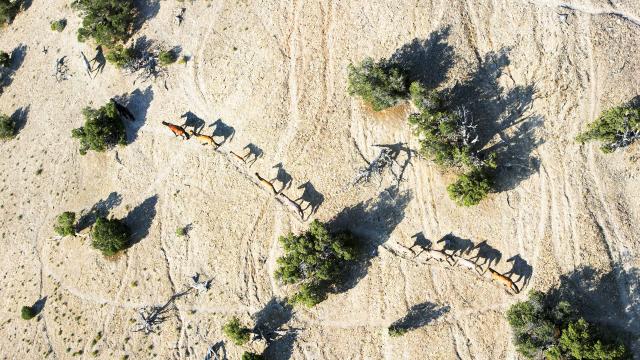
BLM’s management is also informed by the results of studies that document wild horse and burro behavior and demography, and that improve survey methods. For example, BLM-supported projects have documented wild horse behaviors before and after gather operations, and in bands either with or without immunocontraception or gelding as fertility control treatments. Demographic research has provided estimates of fertility control effectiveness, birth rates and death rates that are used in population models for wild horses. While no model is perfect, models can be useful to project the effects of different management scenarios, in terms of the expected population sizes and long-term costs of on-range and off-range management. The USGS has helped the BLM develop and test several methods for aerial surveys and ground surveys that inventory herd sizes on the range. The BLM has applied these peer-reviewed survey methods in a widespread way since 2013, and has been increasing its use of infrared aerial survey methods.
Unsolicited Research Proposals
Researchers who want to submit an unsolicited proposal (one that is not responsive to any ‘Request for Proposals’) should see directions in the drop-down section below. Any research proposal that asks to involve federally protected wild horses and burros will be strictly scrutinized for animal safety and welfare, appropriateness, scientific merit, and fiscal responsibility.
- Instructions for Submitting Unsolicited Research Proposals / Non-RFP Proposals
Federal or Non-Federal researchers may submit Wild Horse and Burro Research Proposals for BLM review and consideration, even for proposed projects that are not responsive to any available ‘request for proposals.’ No BLM funding is set aside for such proposals, but the BLM does, on occasion, identify funding sources for particularly compelling, unsolicited wild horse and burro-related research proposals.
In keeping with BLM Policy, approval from the BLM Wild Horse and Burro Program Division Chief (HQ-260) is required for any research study related to BLM-administered Wild Horses and Burros, including if that research involves any handling of live wild horses or burros, any funding from the BLM, or any in-kind support from the BLM (such as any involvement of BLM personnel time). Unsolicited / non-RFP proposals must include a description of the research using the template in Attachment A, and also a description of the budget request using the template in Attachment B. The proposal and associated budget request should be sent together to the Wild Horse and Burro Program’s Research Coordinator ([email protected]) to begin the review process.
Similarly, any request for the use of tissues, including DNA, from wild horses or burros for the purposes of research must be approved by the BLM Wild Horse and Burro Program Division Chief (HQ-260). Tissue requests will only be considered for legitimate research that may benefit the management of wild horses and burros, or for which tissues from domestic equines cannot suffice. Any activities that could result in profit resulting from the use of wild horse and burro tissues is illegal and will not be considered. Requests for tissues must use the template for Wild Horse and Burro Applications for Tissue Request for Research, and must be sent to the program’s Research Coordinator ([email protected]) to begin the review process.
The review process for unsolicited wild horse and burro research proposals and for wild horse and burro tissue request applications to the BLM is as follows. Proposals are reviewed by the BLM Wild Horse and Burro Research Advisory Team. That team generally includes at least one BLM Wild Horse and Burro Specialist, the HQ-260 program’s On-range Branch Chief and Research Coordinator, a USDA APHIS Veterinary Services veterinarian, and may include liaisons from the US Forest Service and from the Wild Horse and Burro Advisory Board. For proposals beyond the expertise of the Research Advisory Team, external peer review(s) are solicited. The Research Advisory Team prepares recommendations for the Wild Horse and Burro Program Division Chief, who decides about research proposal and tissue request application approvals.
If a proposal is approved, funding decisions for unsolicited / non-RFP proposals are a separate matter and are as follows. No funding is guaranteed. Any funding decision would depend on the scientific quality of the research proposal, the proposed project’s responsiveness to research needs the BLM has identified, the applicant’s eligibility for funding, the availability of funding, the logistical feasibility of the project, and the BLM’s decision to support the project. The funding mechanism would depend on the type of applicant. Cooperative agreements (also known as financial assistance agreements) are generally the type of instrument for non-federal researchers. For any cooperative agreement to be awarded, the BLM must prepare a ‘notice of funding opportunity’ that is open for at least 60 days to all eligible applicants may apply – in other words, the researcher that wrote the original proposal must still complete for that funding, if it is available. Interagency agreements are generally the type of instrument for funding research conducted by federal agency researchers.
Timing: Researchers proposing to work with federally protected wild horses and burros must plan on a very long lead time between the submission of any such proposal and their desired start of actual research activities. Researchers should plan for at least three (3) months to receive a decision about whether a proposal is approved or denied, after the time of proposal submission. Non-federal researchers should plan on another three to four (3-4) months from proposal approval to the formation of any cooperative agreement. The time to prepare an interagency agreement may be slightly shorter. The BLM may need to prepare National Environmental Policy Act (NEPA) analyses for research activities – this process can take over a year. The time for NEPA analysis may require steps including: the preparation of a draft Environmental Assessment; solicitation of public comments; response to and incorporation of public comments into a final Environmental Assessment and associated Finding of No Significant Impact and Record of Decision, where applicable. Further delays may be caused by administrative appeals or litigation.
Approved research will be monitored. To retain funding and approval, researchers must abide by the terms of any permits and agreements with the BLM related to the project.